
June 4 2026
June in Lincoln is a beautiful time to be outside. Gardens are growing, lawns need attention, flowers are in bloom, and many homeowners are spending more time planting, trimming, watering, and keeping up with yardwork.
For older adults, these activities can be a meaningful way to stay active. Gardening and light outdoor work may support mobility, strength, balance, and overall well-being. But they can also place added stress on your knees, hips, shoulders, back, wrists, and hands, especially when the work involves bending, kneeling, lifting, twisting, or repeating the same motion for long periods.
At Sagewell Orthopaedics, we want you to enjoy the season with confidence. With a few smart habits, you can help protect your joints, reduce strain, and recognize when discomfort may need more attention.
Why Yardwork Can Be Hard on Your Joints
Yardwork often feels simple in the moment, but it can be physically demanding. Pulling weeds, carrying mulch, pushing a mower, lifting planters, or reaching overhead to trim branches can all challenge your muscles and joints.
Unlike a structured workout, yardwork can also make it easy to lose track of time. You may bend over for longer than planned, kneel on hard ground, or keep repeating the same movement until soreness starts to build.
Common areas that may become irritated during yardwork include:
- Knees: From kneeling, squatting, climbing steps, or walking on uneven ground
- Hips: From bending, twisting, lifting, or getting up and down from the ground
- Shoulders: From reaching, pruning, raking, or lifting bags and tools
- Wrists and hands: From gripping tools, pulling weeds, or using clippers
- Back: From bending at the waist, carrying heavy loads, or twisting while lifting
A little muscle soreness after activity can be normal. But pain that lingers, worsens, or limits your normal movement may be a sign that your body needs rest, support, or evaluation.
Quick takeaway: Yardwork counts as physical activity. Treat it like one by warming up, pacing yourself, and listening to your body.
Start With a Gentle Warm-Up
Before heading into the yard, take a few minutes to prepare your body. A short warm-up may help your joints move more comfortably and reduce stiffness before activity.
Try simple movements like:
- Walking around the yard or driveway for 5 minutes
- Gentle shoulder rolls
- Slow ankle circles
- Easy marching in place
- Light hip and knee bends while holding onto a stable surface
- Opening and closing your hands to loosen your grip
You do not need an intense routine. The goal is to increase circulation, loosen stiff joints, and help your body ease into movement.
This can be especially helpful in the morning, when joints may feel tighter after sleep. If you have arthritis or ongoing joint stiffness, starting slowly can make a noticeable difference in how you feel during and after outdoor work.
Protect Your Knees While Gardening
Kneeling is one of the most common sources of discomfort during gardening. It places direct pressure on the knee joint and can make it harder to get back up safely.
To reduce knee strain:
- Use a thick kneeling pad or garden cushion
- Try a raised garden bed when possible
- Sit on a low garden stool instead of kneeling
- Change positions often
- Avoid staying in a deep squat for long periods
- Use a stable support when getting up from the ground
If you already have knee arthritis, meniscus concerns, or past knee injuries, uneven ground and repeated bending may cause symptoms to flare. Plan ahead by keeping tools close, working in smaller sections, and taking breaks before your knees feel overly tired.
Watch for knee swelling, sharp pain, catching, locking, or a feeling that the knee may give out. These symptoms may need evaluation, especially if they do not improve with rest.
Use Smart Lifting Habits
June yardwork often comes with lifting. Bags of soil, mulch, pots, hoses, watering cans, and outdoor decorations can be heavier than they look.
When lifting, keep the object close to your body and bend through your knees and hips instead of your waist. Try not to twist while carrying something heavy. Turn your whole body and take small steps instead.
It may also help to:
- Split heavy loads into smaller amounts
- Use a wheelbarrow or garden cart
- Ask for help with large planters or bags
- Avoid lifting from awkward angles
- Store frequently used items at waist height when possible
If something feels too heavy, it probably is. It is better to make two trips than risk a strain that affects your mobility for days or weeks.
Quick takeaway: Protecting your joints often starts with reducing unnecessary strain. Smaller loads and better body mechanics can go a long way.
Be Careful With Repetitive Motions
Pulling weeds, clipping branches, raking, watering, and using hand tools can involve repeated movements. Over time, this may irritate tendons and joints, especially in the shoulders, elbows, wrists, and hands.
To help prevent overuse:
- Switch hands when possible
- Rotate tasks every 15 to 30 minutes
- Use tools with padded, easy-grip handles
- Keep wrists in a neutral position instead of bent sharply
- Take short stretch breaks
- Avoid gripping tools tighter than needed
For older adults with arthritis in the hands or wrists, ergonomic tools can make gardening more comfortable. Look for lightweight tools with larger handles, spring-assisted pruners, or long-handled tools that reduce bending and gripping.
Pay attention to numbness, tingling, weakness, swelling, or pain that continues after the task is done. These symptoms may suggest irritation that needs rest or further care.
Pace Yourself in the Nebraska Heat
Early summer in Lincoln can bring warm afternoons, strong sun, and humidity. Heat can make outdoor work feel harder and may increase fatigue, which can affect balance, coordination, and joint control.
Try to schedule yardwork during cooler times of day, such as morning or early evening. Drink water before you feel thirsty, wear supportive shoes, and take breaks in the shade.
It is also wise to break larger projects into smaller sessions. Instead of doing the entire yard in one afternoon, consider spreading tasks across several days.
A helpful approach is to use a simple rhythm: work for 20 to 30 minutes, then pause for water, shade, and a quick body check. Ask yourself: Are my joints starting to ache? Am I limping? Do I feel unsteady? Am I more tired than expected?
If the answer is yes, it may be time to stop for the day.
Wear Supportive Shoes Outside
It can be tempting to slip on sandals or worn-out shoes for quick yard tasks. But uneven grass, garden beds, hoses, rocks, and steps can increase your risk of tripping or twisting an ankle.
Supportive footwear can help protect your feet, ankles, knees, and hips. Choose shoes with:
- Good traction
- A secure fit
- Cushioned support
- A stable sole
- Closed toes for protection
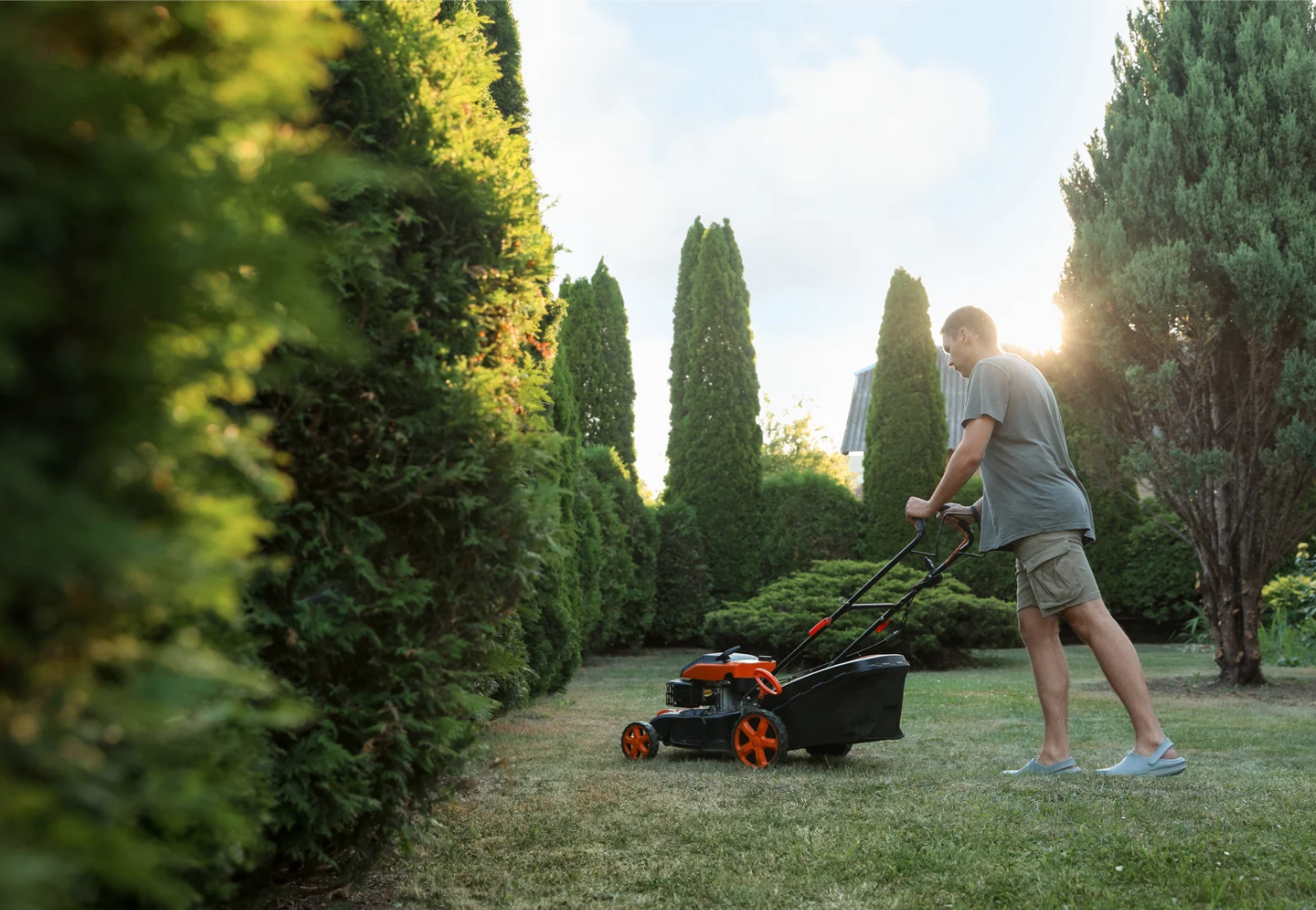
This is especially important if you are mowing, carrying items, walking on uneven ground, or working near tools.
Good footwear may not seem like an orthopaedic priority, but it can play an important role in balance and joint alignment. When your feet are supported, the rest of your body often moves more safely and comfortably.
Know the Signs That Discomfort Needs Attention
Some soreness after yardwork may improve with rest, hydration, gentle stretching, or over-the-counter anti-inflammatory medication if appropriate for you. But certain symptoms should not be ignored.
Consider reaching out for evaluation if you notice:
- Pain that lasts more than a few days
- Swelling around a joint
- Pain that worsens with walking, stairs, or daily activity
- Trouble bearing weight
- A joint that feels unstable or gives out
- Sharp pain after a twist, fall, or sudden movement
- Numbness or tingling
- Loss of motion or strength
- Pain that keeps returning every time you do yardwork
Early attention can help identify what may be causing your symptoms and what treatment options may support your comfort and mobility.
At Sagewell Orthopaedics, our team focuses on understanding your goals, lifestyle, and activity level. Whether you want to keep gardening, enjoy walks around the neighborhood, travel this summer, or simply move through your day with less discomfort, we are here to help you explore the next best step.
Simple Ways to Make Yardwork More Joint-Friendly
You do not have to give up the outdoor activities you enjoy. Small changes can make a big difference.
Try these joint-friendly strategies this June:
- Use raised planters to reduce bending
- Keep a stool or chair nearby for seated tasks
- Choose lightweight hoses and tools
- Use a cart instead of carrying supplies
- Alternate between standing, sitting, and walking tasks
- Stretch gently after finishing
- Keep pathways clear of hoses, tools, and uneven items
- Ask for help with heavy or awkward jobs
- Stop before discomfort becomes pain
The goal is not to avoid movement. The goal is to move wisely, pace yourself, and protect your joints so you can keep doing what you enjoy throughout the season.
Enjoy the Season With Confidence
Gardening and yardwork can be rewarding ways to stay active during June in Lincoln. With smart preparation, supportive tools, safe lifting, and steady pacing, you can help reduce strain on your joints while enjoying time outdoors.
Listen to your body as you work. Mild soreness may pass, but ongoing pain, swelling, weakness, or changes in mobility should not be ignored.
If joint discomfort is affecting your ability to garden, complete yardwork, walk comfortably, or enjoy daily life, Sagewell Orthopaedics is here to help.
Contact Sagewell Orthopaedics to schedule an evaluation and learn more about care options that may support your mobility this summer.